
Injured on a New York City Bus or in an Accident Involving an NYC Bus? Here’s What You Need to Know
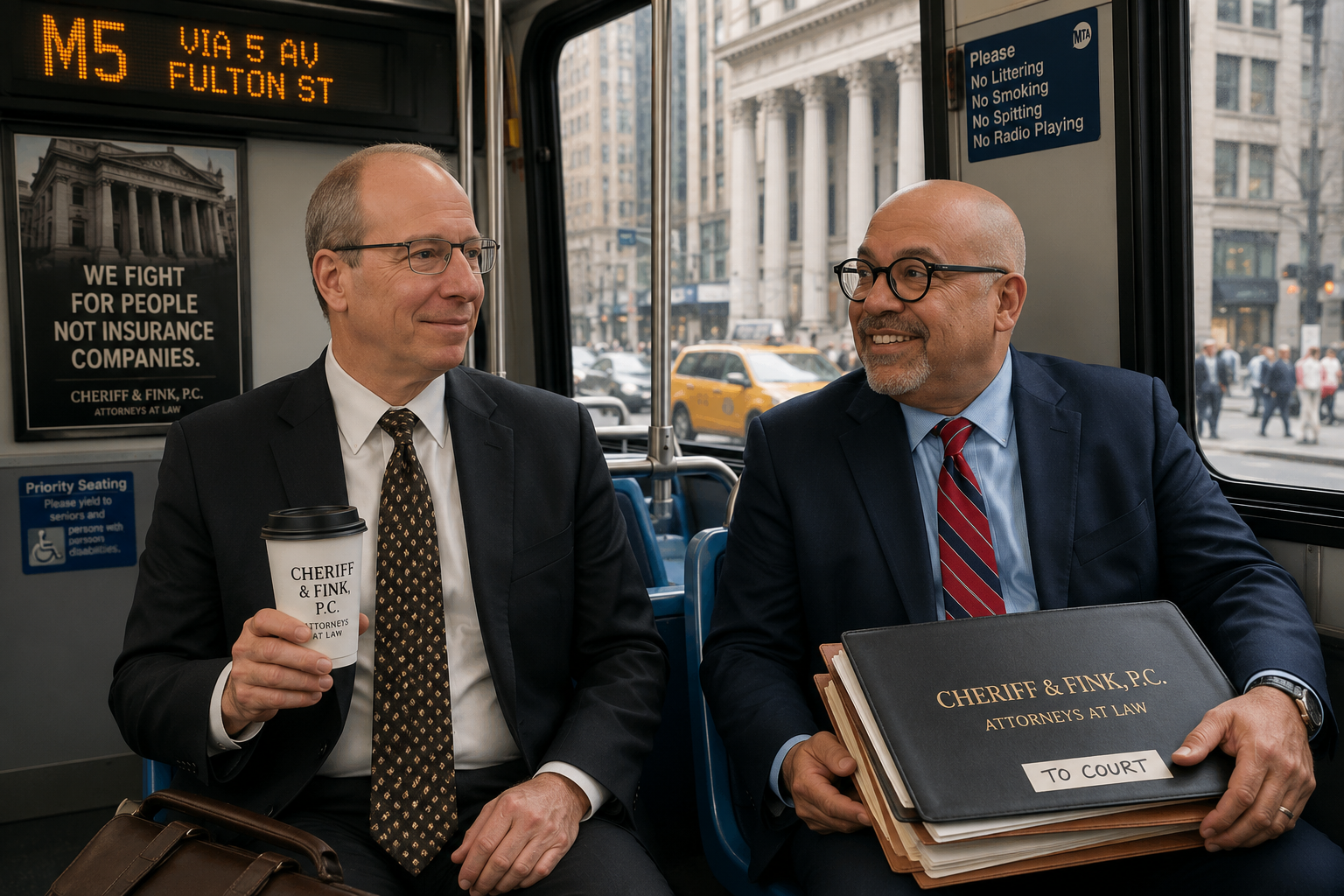
Every day, millions of New Yorkers rely on buses operated by the New York City Transit Authority (NYCTA) and the Metropolitan Transportation Authority (MTA). While most rides are uneventful, bus accidents can and do happen. Passengers can be injured when a bus stops suddenly, starts moving before riders are seated, strikes another vehicle, or is involved in a collision. Motorists, pedestrians, cyclists, and passengers in other vehicles can also suffer serious injuries when involved in an accident with a city bus.
If you are injured in an accident involving an NYC bus, understanding your rights—and acting quickly—is critical.
First Things First: Get Medical Attention
Your health comes first.
Even if you think your injuries are minor, seek medical attention immediately. Many injuries, including concussions, spinal injuries, herniated discs, and soft tissue injuries, may not fully manifest until hours or days after the accident.
Prompt medical treatment not only protects your health but also creates documentation that may become important if you pursue a claim.
No-Fault Benefits May Be Available
Many people are surprised to learn that New York’s No-Fault insurance system may apply even when an MTA or NYC Transit bus is involved.
If you were:
- A passenger on the bus;
- Occupying another vehicle involved in the collision; or
- A pedestrian struck by a bus;
you may be entitled to No-Fault benefits that can pay for:
- Medical treatment;
- Lost wages;
- Transportation to medical appointments; and
- Other necessary accident-related expenses.
However, there is an important deadline.
The 30-Day No-Fault Rule
Applications for No-Fault benefits generally must be filed within 30 days of the accident. Missing this deadline can jeopardize valuable benefits that could otherwise help pay your medical bills and replace lost income.
Many injured people focus on recovery and don’t realize the paperwork clock is already ticking.
The Biggest Trap: The 90-Day Notice of Claim Deadline
When a private driver causes an accident, injured victims generally have years to commence a lawsuit. Claims involving NYC buses are very different.
Because the MTA and NYC Transit Authority are public entities, an injured person typically must serve a formal Notice of Claim within 90 days of the accident. Missing this deadline can severely damage or even eliminate your right to recover compensation.
This requirement catches many people off guard.
Imagine a passenger suffers a serious shoulder injury when a bus driver abruptly accelerates before she reaches her seat. She spends weeks attending medical appointments and physical therapy. By the time she begins thinking about legal action, the 90-day deadline may be rapidly approaching—or already gone.
Unfortunately, we have seen situations where otherwise valid claims become significantly more difficult because this deadline was overlooked.
What Is a Notice of Claim?
A Notice of Claim is a legal document that informs the public authority of:
- When and where the accident occurred;
- How it happened;
- The injuries sustained; and
- The basis for the claim.
After the Notice of Claim is filed, the transit authority may require the injured person to appear for a hearing under oath, often referred to as a “50-h hearing,” before a lawsuit can proceed.
Can You Sue the MTA or NYC Transit Authority?
Yes.
If the bus driver, transit authority, or another responsible party was negligent, you may be entitled to compensation for:
- Pain and suffering;
- Lost earnings;
- Future medical expenses;
- Permanent injuries; and
- Other damages.
In most cases involving the MTA or NYCTA, a lawsuit must generally be commenced within one year and ninety days of the accident after the Notice of Claim requirements are satisfied.
There May Be More Than One Responsible Party
Many bus accident cases involve multiple defendants.
For example:
- A bus may be struck by a negligent driver.
- A defective traffic signal may contribute to a collision.
- A roadway defect may cause a bus operator to lose control.
- A maintenance contractor may have failed to properly service the vehicle.
An experienced attorney will investigate all potentially responsible parties to maximize the available recovery.
What Evidence Should You Preserve?
If possible, try to gather:
- Bus number and route information;
- Photographs of the scene;
- Contact information for witnesses;
- Police accident reports;
- Medical records; and
- Any photographs of visible injuries.
Importantly, buses often contain onboard cameras. Prompt action may help preserve valuable video evidence before it is overwritten or lost.
Don’t Wait to Protect Your Rights
Bus accident claims are significantly different from ordinary motor vehicle accidents because they involve governmental entities and strict procedural requirements.
The most important thing to remember is this:
You may have only 30 days to apply for No-Fault benefits and as little as 90 days to serve a Notice of Claim.
If you or a loved one has been injured while riding an NYC bus or in an accident involving an MTA or New York City Transit Authority bus, speaking with an experienced attorney as soon as possible can help ensure that critical deadlines are met and important evidence is preserved.
Contact Cheriff & Fink, P.C.
If you have questions about a bus accident claim, contact Cheriff & Fink, P.C. for a free consultation.
Cheriff & Fink, P.C.
Attorneys At Law
Offices in Nassau and Westchester – Serving the NYC Area
Phone: 212-285-4100
Website: cf-lawyers.com
Because when deadlines are measured in days—not years—waiting can be costly.

We're Here to Help You
Contact us today for a consultation and guidance.